Project Rationale
With the rise of generative Artificial Intelligence (AI) making its way into our everyday lives, I wanted to know more about how students are using AI, and its impact on their research and speech writing skills in my debate classes. Although AI can support students with brainstorming, researching, organizing, and speech writing, teachers still need to understand whether it strengthens students’ debate skills or leads them to depend too much on the technology. Debate requires higher order thinking skills such as analysis, synthesis, and evaluation, in addition to application. Teachers need to understand how student AI use impacts these skills. This research will help provide insight into how students are using AI for research and writing in debate, as well as their perception of the impact AI has on the quality of their arguments and their performance in debate rounds.
Project Context
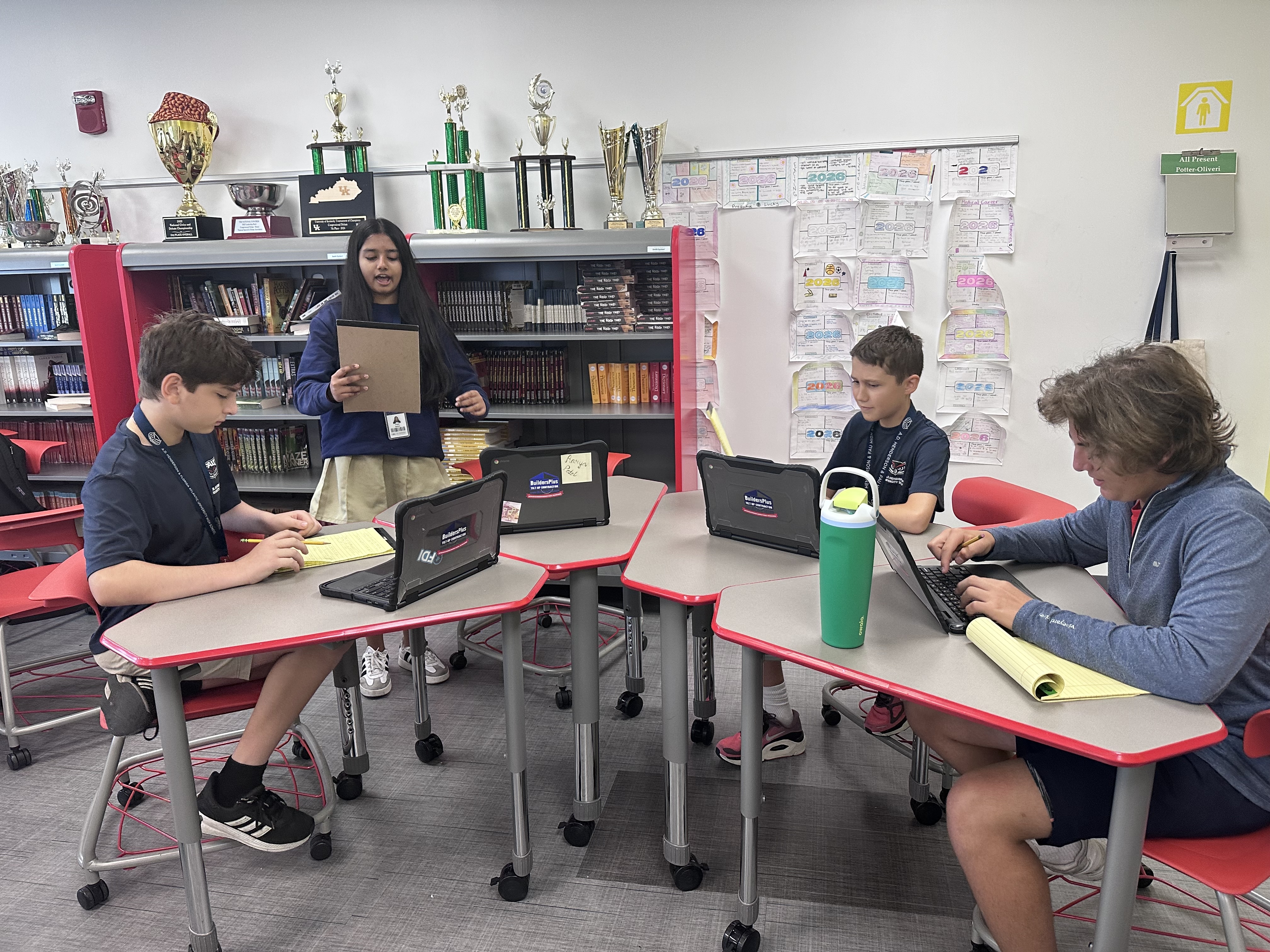
The study took place in an A-rated, public K-8 lab school that is affiliated with, and housed on, a state university campus. Admittance to the school is based on a lottery system for K-8 students, and the demographic population of the school reflects the demographic composition of the State of Florida. The participants were from a middle school classroom in which 7th and 8th grade students were enrolled in a high-school level course- Debate 3 Honors. Eight students participated in the debate rounds (two girls and six boys), and three of the students were in eighth grade and five of the students were in seventh grade.
Supportive Literature
AI and Debate Skill Development
Recent research trends reflect a growing interest in AI-supported learning, particularly in debate preparation. Available research identifies both instructional benefits and concerns. Across multiple studies, AI tools appear to strengthen students’ ability to generate arguments, organize claims, and engage in structured debates. Similarly, Yu et al. (2025) reported increases in both science literacy and AI literacy through socio-scientific debate activities, while Bui et al. (2025) identified improvements in idea development and argument structuring among English foreign language learners.
Engagement and Confidence
In addition to improvements in debate skills, some studies point to broader educational implications. Zhang et al. (2025) found that incorporating AI into classroom debates helped lower students’ anxiety about speaking and made participation feel more accessible. By supporting idea generation and preparation, AI appeared to reduce the fear of judgment and hesitation to contribute during discussions. Levitt and Grubaugh (2025) frame AI-supported debate as a space where students can practice the critical thinking and reasoning skills they need for debate and civic participation outside of school. Yongzhi (2024) emphasizes debate’s ability to increase engagement, but they noted the substantial planning required of teachers.
Autonomy Concerns
Current research also raises concerns about the implementation of AI in debate classrooms. Talgatov et al. (2024) found that teachers reported mixed perceptions, particularly regarding student independence and content retention. Similarly, Zhang et al. (2025) and Bui et al. (2025) caution that overreliance on AI may negatively impact students’ ability to think critically and analyze content.
Research Gaps
Student use of AI in classrooms is a relatively new concern, so there exists a lack of research regarding the long-term impact on students, especially research focused on middle school students. AI use in classrooms continues to rise, so the importance of research focusing on how to integrate the technology is essential. Future research should examine how to utilize AI in ways that support students' ability to think critically, as opposed to diminishing it.
Research Methods
Participants
Eight students participated in the study: five seventh-grade students and three eighth-grade students (two girls and six boys). All students were enrolled in a high school-level honors debate course. Groups were randomly assigned for each debate round.
Data Collection
Data was collected from the following sources:
- Debate Pre-Survey
○ Students participated in a survey at the beginning of the study in which they rated their perception of their debate skills.
- Debate Round 1 Post Survey (AI use not allowed)
○ Students completed a survey to rate their perception of their debate skills during round one.
- Debate Round 2 Post Survey (AI use allowed)
○ Students completed a survey to rate their perception of their debate skills during round two.
- Debate Round 3 AI Choice Feedback Survey
○ Students completed a brief survey prior to prepping and debating in round three. They explained their choice to use AI or not use AI for preparation for round three.
- Debate Round 3 Post Survey
○ Students completed a survey to rate their perception of their debate skills during round two.
- Debate Rubric
○ The teacher used a rubric to evaluate student performance during each round of debate. The rubric aligns with the elements students used to rate themselves in the surveys.
- Focus Group Questions
○ Students participated in a focus group discussion after all data collection and analysis.
Procedures
Students were given a pre-survey before the debate preparation, and rounds were assigned. The survey asked students to rate their skills across different elements of debate using the teacher-created rubric. Students participated in three public forum debate rounds, each with a different topic. After each round of debate, students took a post-survey to report their perceptions of their performance and ability during the round, and the teacher assessed each student using a rubric aligned with the survey skills.
For round one, students were not permitted to use any type of AI to prepare for the debate. In round two, students were permitted to use AI for the debate however they wanted, and in round three, they could choose whether to use AI for debate preparation. Prior to beginning the third round of debate, students completed a brief survey to report on their decision to use AI or not to use AI, and they had to provide an explanation for why.
After data collection and analysis, students participated in a focus group to provide qualitative feedback and discuss the results.
Data Analysis
Quantitative data from rubric scores across all three debate rounds were compared to identify differences in the teacher's perception of performance. Survey responses were analyzed descriptively to examine changes in student self-perception. Qualitative data from focus group discussions were reviewed for emerging themes related to confidence, autonomy, preparation strategies, and perceived impact of AI on critical thinking.
Results
The findings from this study suggest that AI supported debate preparation in several ways, but also created challenges related to confidence, understanding, and higher-order thinking skills. Three major findings emerged from the data.
Idea Generation and Self Perception
AI improved efficiency for research and speech writing, and also supported idea generation, but it did not significantly improve students’ self-perception of their debate skills. Many students explained that AI helped them brainstorm ideas, organize speeches, and prepare more quickly. For example, Student 6 stated that AI “helped me come up with ideas more quickly” (Student 6, Post Survey 2). However, survey averages remained relatively stable across all rounds, suggesting that students’ confidence in their debate abilities did not meaningfully increase over time.
Overreliance on AI and Reduced Confidence
Students’ self-perception slightly decreased over the course of the study, and qualitative responses suggested that overreliance on AI may have impacted confidence and understanding. Several students described negative experiences when depending too heavily on AI-generated speeches or evidence. One stated that “AI made the performance way worse,” while another student explained that they “didn’t understand the topic well” after relying on AI (Student 1 and Student 4, Post Survey 2). Focus group responses also showed that students felt more confident when they researched and wrote speeches themselves.
Higher-Order Skills Remain Challenging
While the data shows that students improved in evidence use and organization, the data does not show improvement in higher-order debate skills such as rebuttal and counterargument development. Teacher rubric scores showed growth in evidence and reasoning across the debate rounds. However, rebuttal and counterargument scores remained lower and less consistent. Student responses aligned with these findings, as many students identified rebuttal as one of the most difficult aspects of debate.
Implications
The findings from this study suggest that AI can be a useful support tool in debate preparation when used appropriately. Students benefited from AI for brainstorming, organization, and idea generation, but the results also showed that overreliance on AI may negatively impact confidence and understanding. These findings suggest that AI should support student learning rather than replace students’ own thinking, preparation, and critical analysis.
The study also highlights the importance of teaching students how to use AI responsibly and effectively. Students need instruction on how to effectively evaluate sources and how to use AI to support rather than complete academic work. In addition, the findings suggest that AI may not effectively develop higher-order debate skills such as rebuttals and counterarguments. Teachers should continue providing direct instruction and practice opportunities focused on critical thinking, rebuttal development, and responding to opposing arguments.
Overall, the findings suggest that thoughtful integration of AI may support student learning, but students still need opportunities to independently develop debate, research, and critical thinking skills.
References
Bui, T. T. G., Ngo, N. V. A., & Mai, D. H. (2025). Applying AI Tools to Enhance Argumentation Skills in Debate Activities for EFL Students. International Journal of AI in Language Education, 2(3), 83-100.
Levitt, G., & Grubaugh, S. (2025). Debate Centered Civics Education: Using AI to Teach Future Ready Skills and Better Prepare Students for College, Careers, and Civic Life. Technium Soc. Sci. J., 70, 165.
Talgatov, Y., Kassymova, G., & Nurtanto, M. (2024). AI in the classroom: A boon or a threat to pedagogical practices. In Materials of International Scientific-Practical Internet Conference “Challenges of Science (Vol. 61, pp. 128-134).
Yongzhi, S. (2024). The Impact of Debate Lessons, Powered by Generative AI, on Student Learning. IAFOR Journal of Education, 12(3), 13-39.
Yu, H. Y., Son, G. Y., & Kim, J. G. (2025). Examining the use of ecology-related socio-scientific issue debate class using generative AI to improve middle school students’ science and AI literacy. Journal of Biological Education, 1-26.
Zhang, Z., Sun, B., & An, P. (2025, April). Breaking barriers or building dependency? exploring team-llm collaboration in ai-infused classroom debate. In Proceedings of the 2025 CHI Conference on Human Factors in Computing Systems (pp. 1-19).