Project Rationale
Advanced learners at FAU High School often encounter accelerated coursework earlier than their traditional peers. However, many are reluctant to seek academic support due to a persistent misconception: that tutoring indicates weakness.
Research shows that while gifted students benefit significantly from structured academic assistance, they often avoid it due to social stigma and the internal pressure to perform independently.
By reframing tutoring as enrichment and academic coaching—and supporting this shift with monthly data announcements—this project aims to:
- Shift student mindsets regarding help-seeking behaviors.
- Increase actual utilization of academic support services.
- Strengthen long-term academic resilience.
Ultimately, these findings will inform our own practice at FAU High School and provide a scalable model for educators working with high-achieving populations nationwide.
Context
This study is being conducted at Florida Atlantic University High School, an early-college public laboratory school where students begin with a combination of honors-level high school and dual enrollment courses in 9th grade before transitioning to full-time university coursework in 10th grade.
Our research focuses specifically on the 9th-grade cohort —a group of 161 high-achieving students facing increasingly rigorous academic demands. Historically, these students have had limited need for academic support services in their earlier schooling, leading them to view tutoring as a remedial "punishment" rather than a strategic benefit.
To combat this, the project introduces a multi-faceted approach:
- School-Wide Communication: Consistent messaging to normalize academic coaching.
- Data Tracking: Monitoring tutoring participation rates.
- Mixed-Methods Assessment: Using survey assessments and optional student interviews to measure shifts in mindset.
FAU High School's unique dual-enrollment environment provides an ideal laboratory setting for studying stigma reduction among advanced learners.
Supportive Literature
High-Impact Tutoring and Student Achievement
High-impact tutoring has emerged as one of the most effective academic interventions for improving student learning across K–12 settings, consistently demonstrating positive effects when implemented with specific structural features. Synthesized research and meta-analyses indicate that students who receive structured tutoring experience substantial, significant academic gains compared to peers who do not receive additional support (Nickow et al., 2020). These improvements are especially notable when tutoring occurs regularly and is delivered in one-on-one or small group settings, allowing tutors to target individual learning gaps and provide immediate feedback. Beyond setting size, the frequency and consistency of sessions are critical drivers of success; studies indicate that tutoring delivered three to five times per week produces much stronger academic outcomes than less frequent interventions (Nickow et al., 2020). Furthermore, structural delivery plays an essential role in engagement. Programs conducted during the school day show vastly higher levels of student participation and attendance compared to after-school programs because in-school scheduling eliminates systemic barriers like transportation, extracurricular conflicts, and student fatigue (Kraft & Falken, 2021). Finally, tutoring effectiveness relies heavily on tutor preparation and the intentional alignment of materials with the core curriculum (Kraft & Falken, 2021). When tutors receive structured training and reinforce regular classroom concepts, they provide meaningful opportunities for guided practice. Ultimately, the literature demonstrates that tutoring programs that are frequent, highly structured, and seamlessly integrated into the school day are most likely to produce substantial improvements in student achievement.
Normalizing Support: Mindset Change in Advanced Learners
In gifted education, a primary barrier to addressing underachievement is the psychological belief held by many advanced learners that needing assistance directly undermines their identity as “naturally capable.” Systematic evidence indicates that socio-emotional and motivational factors heavily dictate whether high-ability students will seek or accept support, making a mindset change a strict prerequisite for effective intervention. A comprehensive review of literature spanning 2010 to 2024 highlights that student self-concept, personal motivation, and contextual influences—such as peers, family, and overall school climate—strongly shape underachievement patterns (Raoof et al.). Consequently, to drive actual support utilization, schools must intentionally reframe help-seeking behavior as a sign of strategic self-regulation and expertise-building rather than a marker of deficiency (Raoof et al.). Developing emotional intelligence (EI) and advanced self-regulatory learning strategies is repeatedly linked to better acceptance and use of structured assistance. Specifically, gifted underachievers benefit significantly from explicit instruction in EI and advanced learning strategies, which normalizes guided practice, coaching, and tutoring as standard tools for mastery (Tsai, 2025). By positioning tutoring as an environment to practice metacognition and emotion regulation, institutions can recast academic support as an accelerator of potential rather than a corrective mechanism for weakness (Tsai, 2025). Practical guidance underscores the necessity of building environments where risk-taking and help-seeking are explicitly normalized. Intentionally designed supports—including tutoring—must actively dismantle the social stigma surrounding receiving help while simultaneously tackling instructional gaps (Guilbault & McCormick, 2023).
Summary
The literature demonstrates that tutoring programs that are frequent, structured, and seamlessly integrated with classroom instruction are most likely to produce meaningful improvements in student achievement. Further, the literature converges on a clear premise: tutoring and supplemental supports are most impactful for gifted underachievers when schools reframe help-seeking as strategic expertise-building, pair it with EI and self-regulation coaching, and cultivate identity-safe, high-expectation contexts that normalize support as a pathway to realizing potential.
Research Methods
To effectively measure the impact of strategic messaging and data transparency on help-seeking behaviors, this study employs a mixed-methods action research design. Responsibilities and data-collection streams are dynamically divided among the primary researchers.
Project Timeline
The study was conducted over one academic year using a phased data collection process. Baseline data were collected in September and included tutoring attendance records and an initial survey administered to the ninth-grade cohort to measure students' academic mindset and perceptions of stigma related to utilizing academic support services. From October through April, tutoring attendance was monitored on a weekly basis while monthly school-wide announcements highlighting tutoring participation were shared to normalize the use of academic support services and reduce perceived stigma. A mid-year digital survey was administered in December during a regularly scheduled class period to assess changes in students' academic mindset and willingness to access academic coaching services. In May, final tutoring attendance data were collected, qualitative interview notes were compiled, and an end-of-year digital survey was administered during a regularly scheduled class period to evaluate changes over the course of the study. The timeline below summarizes the sequence of implementation and data collection activities.
Timeframe |
Activity |
||
|
September 2025 |
Collect baseline tutoring attendance data and administer the initial survey measuring academic mindset and stigma perceptions. |
||
|
October 2025 – April 2026 |
Monitor weekly tutoring attendance and provide monthly school-wide announcements reporting tutoring utilization to promote normalization of academic support services. |
||
|
December 2025 |
Administer a mid-year digital survey to assess changes in mindset and willingness to utilize academic coaching. |
||
|
May 2026 |
Collect final attendance data, compile qualitative interview notes, and administer the end-of-year digital survey to evaluate study outcomes.
|
To comprehensively monitor student behaviors and evaluate changes in perceptions throughout the academic year, the study employed three complementary data collection instruments. First, quantitative participation metrics were collected continuously via the school's official tutoring attendance-tracking system, which recorded student participation in real time and enabled researchers to examine patterns in the frequency and consistency of tutoring use. Second, a digital attitudinal and mindset survey was administered at three key points during the study (baseline, mid-year, and end-of-year). Using a 5-point Likert scale, the survey measured students' prior use of tutoring services, comfort with seeking academic assistance, perceived stigma associated with receiving support, and receptiveness to alternative terminology such as academic coaching. Following implementation of the intervention, additional survey items assessed the extent to which the monthly data announcements influenced students' decisions to participate in tutoring services.
To further explore students' experiences beyond the quantitative measures, optional semi-structured focus group interviews were conducted with volunteer participants. These discussions provided qualitative insights into how high-achieving students perceived academic support services, identified barriers that influenced their willingness to seek assistance, and examined whether the linguistic reframing of tutoring as academic coaching affected their attitudes toward utilizing available resources. By integrating continuous administrative attendance records, repeated psychometric survey data, and qualitative student perspectives, the study captured a comprehensive, whole-child understanding of academic vulnerability, help-seeking behaviors, and stigma reduction over the course of the intervention
Data Analysis
Data collected throughout the study were analyzed using both quantitative and qualitative methods to provide a comprehensive understanding of the intervention's impact on the whole child. Quantitative analyses included the use of descriptive statistics to examine trends in tutoring attendance over the course of the study and determine changes in utilization. Survey responses were analyzed using comparative statistical procedures, such as paired t-tests, to assess whether changes in students' academic mindset, perceptions of stigma, and willingness to utilize academic support services were statistically significant between the baseline, mid-year, and end-of-year administrations. Qualitative data from open-ended survey responses and brief student interviews were analyzed using thematic coding to identify recurring patterns and emerging themes. Particular attention was given to changes in students' language that reflected reductions in perceived stigma and an increased view of tutoring as a proactive strategy for academic growth and self-regulation.
Results
The intervention yielded significant shifts in both actual service utilization and student attitudes toward academic support. Over the course of the study, the tracking system logged 453 total responses, with 11% of those engagements stemming from direct referrals. The data reveal that a structured combination of school-wide messaging, teacher-aligned advocacy, and transparent monthly participation updates successfully disrupted the "remedial stigma" often held by high achievers. Post-intervention surveys and student interviews demonstrated a notable increase in overall participation frequency and consistency. Crucially, the qualitative feedback confirmed that students began reframing tutoring as a collaborative tool for mastery rather than an admission of weakness, noting that the accessibility of the program made it a highly beneficial asset for academic growth.
Figure 1: Student Receptivity to Strategic Reframing
Survey Metric: "I would be more likely to attend tutoring if it was called ‘enrichment’ or ‘coaching.’" (Scale: 1 = Agree, 5 = Disagree). Nearly 70% of the advanced 9th-grade cohort indicated that linguistic branding strongly impacts their willingness to seek help. Shifting school vocabulary from "tutoring" to "academic coaching" removes psychological barriers.
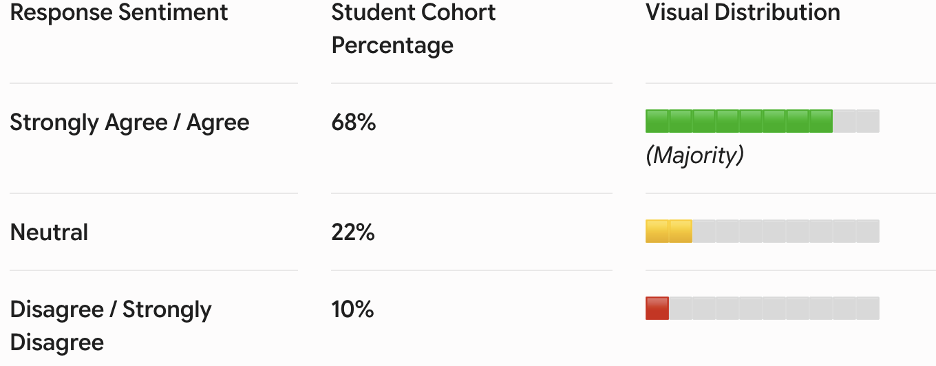
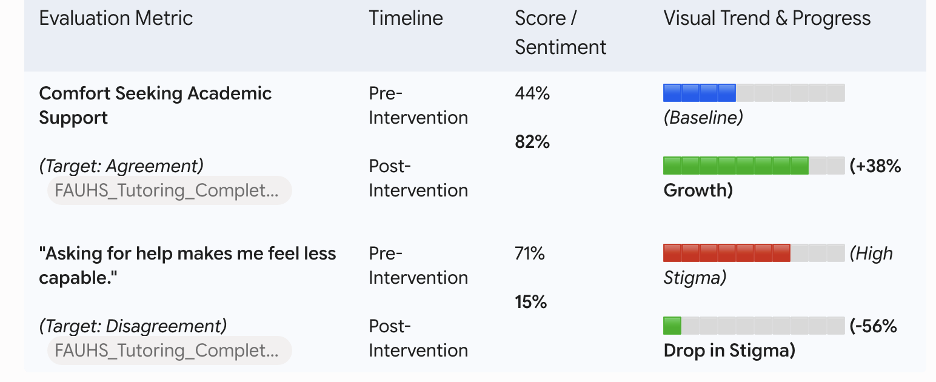
Figure 2: Shift in Stigma & Help-Seeking Comfort
Comparative metrics tracked from baseline (September) to end-of-year (May). The dramatic jump to 82% comfort demonstrated that combining continuous utilization data with proactive messaging successfully normalized academic support as a standard tool.
The sharp 56% decrease in students equating help with lower capability highlights a fundamental identity shift. By reframing support frameworks as strategic self-regulation, high-ability learners actively dismantled the psychological barrier of having to appear "naturally perfect.
In Their Own Words: Student Focus Group Highlights
To complement the quantitative findings, qualitative data gathered through brief student interviews and counselor minute meetings provided additional insight into students' evolving perceptions of academic support. Student responses indicated an overall shift toward viewing tutoring as a valuable resource rather than a remedial service. One participant shared, "I think tutoring is a really beneficial tool students can use to help them grow academically. One-on-one tutoring has really helped me improve academically..." This response demonstrates that the student viewed tutoring as a proactive strategy for academic growth instead of a sign of academic weakness, supporting the study's finding that perceptions of tutoring became more positive over the course of the intervention.
Similarly, another student stated, "I loved learning with my friends. The alternate views really encouraged my learning." This comment highlights the importance of the collaborative learning environment created through tutoring and suggests that peer interaction helped normalize participation in academic support services. Rather than focusing solely on receiving help, the student emphasized the value of shared learning experiences, indicating a reduction in the stigma traditionally associated with tutoring.
A third participant remarked, "I like how accessible it is. Keep doing what you are doing!" This feedback suggests that students recognized the availability and approachability of the tutoring program, reinforcing the effectiveness of the intervention in reducing barriers to participation. Collectively, these qualitative findings support the quantitative results by demonstrating increased acceptance of tutoring, decreased perceptions of stigma, and greater willingness among students to engage in academic support services. Together, the interviews provide evidence that the intervention contributed to a more positive help-seeking culture within the ninth-grade cohort.
Project Implications
The findings of this study carry profound implications for institutional policy and the holistic development of high-achieving learners. First, the data proves that academic underperformance or resistance to support among advanced students is often a cultural and psychological challenge rather than an intellectual one. When schools actively dismantle the stigma of help-seeking by treating it as a standard mechanism for elite performance—rather than a safety net for failure—students readily utilize available resources. For school administrators and counselors, this underscores the necessity of proactive, data-transparent communication and the intentional rebranding of support frameworks to mirror university or executive-level coaching models.
Furthermore, implementing these interventions as early as the 9th grade provides a vital protective layer for the "whole child" before they transition into high-stakes, full-time dual enrollment. By shifting mindsets early, educators can prevent the severe GPA drops that permanently damage academic transcripts and narrow future opportunities. Ultimately, this research offers a scalable blueprint for gifted education: when institutions foster an identity-safe environment that normalizes vulnerability as a strength, advanced learners develop the essential self-regulation, resilience, and help-seeking strategies required to navigate rigorous academic ecosystems sustainably.
References
Guilbault, K. M., & McCormick, K. M. (2023). Underachievement of gifted learners in school. In Underachievement in gifted education (1st ed.). Routledge, https://www.taylorfrancis.com/chapters/edit/10.4324/9781003369578-4/underachievement-gifted-learners-school-keri-guilbault-kimberly-mccormick
Kraft, M. A., & Falken, G. T. (2021). A blueprint for scaling tutoring across public schools. EdWorkingPaper No. 21-335. Annenberg Institute at Brown University, https://doi.org/10.26300/dkjh-s987
Nickow, A., Oreopoulos, P., & Quan, V. (2020). The impressive effects of tutoring on student achievement: A systematic review and meta-analysis of the experimental evidence. Educational Evaluation and Policy Analysis, 42(2), 295–321, https://edworkingpapers.com/sites/default/files/ai20-267.pdf
Raoof, K., Shokri, O., Fathabadi, J., & Panaghi, L. (2024). Unpacking the underachievement of gifted students: A systematic review of internal and external factors. Heliyon, 10(17), e36908, https://www.cell.com/heliyon/fulltext/S2405-8440%2824%2912939-8
Ronksley-Pavia, M., & Neumann, M. M. (2020). Conceptualising gifted student (dis)engagement through the lens of learner (re)engagement. Education Sciences, 10(10), https://files.eric.ed.gov/fulltext/EJ1272799.pdf
Tsai, M.-Y. (2025). The literature review of emotional intelligence, well-being, and learning strategies for gifted students. In Emotional intelligence, well-being, and learning strategies. IntechOpen, https://www.intechopen.com/chapters/1220748